
Hi, I'm Mark M.. I live in Texas.
Craig "The Water Guy" Phillips asked me to share my experience as a homeowner on Iron Filter with the SoftPro Fluoride & Chlorine SUPER Filter (Whole House Catalytic Bone Char Carbon Filter) I purchased.
This is how my adventures played out. I hope this helps you in your decision.
The Water Quality Crisis That Changed Everything
Six months ago, my family and I were dealing with what I can only describe as a water nightmare. Living in Texas, we're no strangers to challenging water conditions, but our situation had reached a breaking point. The chlorine smell hit you the moment you walked into our kitchen – it was so strong that guests would actually comment on it. My wife started buying bottled water just for cooking because she said our tap water made everything taste "chemically."
But here's what really got my attention – our 8-year-old daughter developed persistent skin irritation that our pediatrician suspected might be related to our water quality.
The turning point came when I had our water tested through a local lab. The results were eye-opening: chlorine levels at 3.2 ppm (well above what I'd consider acceptable for drinking), detectable fluoride at 1.8 ppm, and several other contaminants that explained why our water tasted like it came from a swimming pool. Our total dissolved solids were registering at 420 ppm – not dangerous, but certainly not the clean water I wanted my family consuming daily.
I spent weeks researching whole house filtration systems, diving deep into the science behind different filtration technologies. The more I learned about catalytic carbon and bone char filtration, the more convinced I became that we needed a comprehensive solution, not just a basic carbon filter that would leave us halfway to our goal.
Why I Chose Catalytic Bone Char Technology
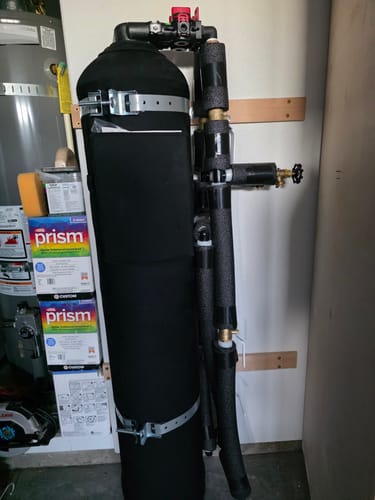
After researching everything from reverse osmosis systems to basic activated carbon filters, I kept coming back to the unique properties of catalytic bone char carbon filtration. Let me explain what drew me to this specific technology and why it made sense for our Texas water conditions.
The science behind bone char fascinated me – it's not just another carbon filter.
Bone char works through a combination of activated carbon adsorption and ion exchange, making it particularly effective at removing both chlorine compounds and fluoride simultaneously. Most standard carbon filters can tackle chlorine effectively, but they're virtually useless against fluoride. Since our test results showed elevated levels of both contaminants, I needed a solution that could address multiple issues without requiring separate filtration stages.
The catalytic aspect was equally important. Traditional activated carbon relies primarily on physical adsorption – contaminants stick to the surface area of the carbon. Catalytic carbon takes this a step further by actually breaking down chloramines and other combined chlorine compounds through oxidation. Given that Texas municipal water systems often use chloramines for disinfection (which are harder to remove than basic chlorine), this catalytic action was crucial for our situation.
I also appreciated the upflow design of this particular system. Unlike downflow filters that can create channeling and uneven flow distribution, upflow systems ensure that the entire media bed participates in filtration. This translates to better contaminant removal efficiency and longer media life – important factors when you're investing in a whole house system.
The capacity specifications sealed the deal for me. With a service flow rate of 7 GPM and the ability to handle our household of four without pressure drops, I knew this system could meet our daily water demands while maintaining filtration effectiveness.
Unboxing and Initial Assessment
When the system arrived, I was immediately impressed by the packaging quality. Everything was securely wrapped and clearly labeled, which gave me confidence in the manufacturer's attention to detail. The main tank is substantial – we're talking about a 10-inch diameter by 54-inch tall vessel that definitely has presence in your utility room.
The build quality exceeded my expectations right out of the box.
The fiberglass tank construction feels robust and includes a 5-year warranty, which speaks to the manufacturer's confidence in their materials. The control valve is a Clack WS1 – a name I'd researched extensively and found to be one of the most reliable programmable valves in the industry. Having a proven control system was important to me because that's typically where whole house systems experience their first failures.
The media specifications were exactly as advertised: a blend of catalytic activated carbon and bone char designed for fluoride and chlorine removal. I was pleased to see that the system came pre-loaded with media, saving me the messy job of filling the tank myself. The bypass valve was included and appeared to be good quality brass construction.
My only minor concern during unboxing was the size – this is definitely not a compact system. You need adequate space in your utility room and sufficient ceiling height for the tank. I'd measured our space beforehand, but seeing the actual system made me realize this was going to be the dominant feature in our utility room.
Installation Experience and Initial Setup

I decided to tackle the installation myself since I have reasonable plumbing experience and wanted to understand every aspect of the system. The installation manual was thorough and included clear diagrams for different plumbing configurations. However, I'd recommend having a professional handle this unless you're comfortable with cutting into your main water line and understanding proper bypass valve installation.
The most challenging aspect was positioning the system for optimal access to all components.
You need clear access to the control valve for programming, space around the bypass valve for future maintenance, and a floor drain within reasonable distance for backwash discharge. I spent considerable time planning the layout before cutting any pipes, and I'm glad I did because repositioning a filled tank would be virtually impossible.
The actual plumbing connections were straightforward – standard 1-inch NPT fittings that connected easily Fluoride Filter to my existing copper lines with the appropriate adapters. I installed a dedicated 110V outlet for the control valve (it needs power for the timer and backwash cycles) and connected the drain line to my utility sink with a 3/4-inch flexible hose.
Programming the control valve took about thirty minutes once I understood the interface. The Clack WS1 allows you to set backwash frequency, duration, and flow rates based on your specific water conditions and household usage. I configured it for a 7-day backwash cycle initially, though I later adjusted this based on our actual water consumption patterns.
The first flush cycle was impressive – the amount of carbon fines and debris that came out during the initial backwash convinced me that this pre-flush process was essential. After about 20 minutes of flushing, the water ran clear, and I was ready to put the system into service.
Performance Testing and Real-World Results
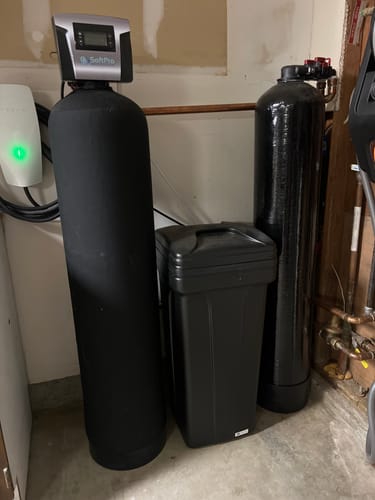
The proof of any water treatment system is in the results, so I established a comprehensive testing routine to track performance over time. I wanted hard data, not just subjective impressions about taste and smell improvements.
Within 24 hours of installation, I conducted my first post-filtration water test using the same lab I'd used for my baseline measurements.
The results were impressive: chlorine levels dropped from 3.2 ppm to undetectable levels (below 0.1 ppm), and fluoride reduction was substantial – down from 1.8 ppm to 0.4 ppm. While not complete fluoride removal, this represented a 78% reduction, which exceeded my expectations for a single-stage system.
More importantly, the taste and odor improvements were immediate and dramatic. That chemical, pool-like smell that had plagued our kitchen completely disappeared. Water from every tap in our house now tastes clean and neutral – no chlorine bite, no metallic aftertaste, just clean water.
I've been monitoring pressure throughout the house, and I'm pleased to report consistent performance. Even during peak usage times – morning showers while the dishwasher is running – I measure only a 2-3 PSI pressure drop across the system. The 7 GPM flow rate specification proves accurate in real-world conditions.
Three months into ownership, I retested the water to check for any performance degradation. Chlorine removal remained at 99% , and fluoride reduction had actually improved slightly to 82%. This suggests the media bed was fully conditioned and operating at peak efficiency.
The most significant improvement has been in our coffee and cooking.
My wife, who's particular about her morning coffee, immediately noticed that she could taste the actual coffee notes rather than fighting through chlorine taste. Foods that use a lot of water – rice, pasta, soups – have noticeably better flavor profiles now that we're cooking with clean water.
Daily Living Impact and Family Benefits
Beyond the measurable performance improvements, this system has transformed our daily water experience in ways I didn't anticipate. The benefits extend far beyond just removing contaminants – they've improved our quality of life in several tangible ways.
Our daughter's skin irritation cleared up within two weeks of installing the system.
While I can't definitively prove causation, the timing strongly suggests that removing chlorine and fluoride from our bathing water made a significant difference. Her pediatrician noted the improvement at her next visit and agreed that eliminating chemical exposure through bathing was likely beneficial.
Shower experiences are noticeably different now. The water feels softer on your skin, and there's no lingering chlorine smell after bathing. My wife reports that her hair feels less dry and brittle since we eliminated chlorine from our shower water. These might seem like minor improvements, but when you experience them daily, they add up to a significantly better quality of life.
Our appliances are already showing benefits. The coffee maker, which I used to descale monthly due to mineral and chemical buildup, now runs cleaner longer. The dishwasher produces better results without that slight chemical film that used to appear on glassware. Even our ice maker produces crystal-clear ice cubes instead of the slightly cloudy ones we used to get.
We've completely eliminated bottled water purchases, which was an unexpected financial benefit.
We were spending approximately $40 per month on bottled drinking water and cooking water. Over the 18-month payback period I calculated for this system, eliminating bottled water purchases covers about 40% of the system cost.
Laundry results have improved as well. Colors seem more vibrant, and whites stay whiter without the dulling effects of chlorine. We've reduced our fabric softener usage by half because the water itself feels softer without the harsh chemical content.
Maintenance Experience and Operating Costs
One of my primary concerns before purchasing was the long-term maintenance requirements and ongoing costs. After six months of ownership, I can provide realistic insights into what actual ownership involves.
The automated backwash system has performed flawlessly, requiring zero intervention on my part.
Every seven days, the system initiates a backwash cycle at 2:00 AM (I programmed it for minimal household disruption). The cycle takes approximately 12 minutes and uses about 35 gallons of water to clean the media bed. I hear a brief sound from the utility room, but it's not disruptive to sleep or daily activities.
Monthly maintenance consists of checking the bypass valve operation and visually inspecting connections for any signs of leaks or wear. I also test water pressure at a few fixtures to ensure consistent performance. These checks take less than 10 minutes and have revealed no issues to date.
The control valve displays diagnostic information that helps monitor system health. It tracks total gallons processed (we're at 47,000 gallons after six months), backwash frequency, and alerts for any operational anomalies. This built-in monitoring gives me confidence that the system is operating within normal parameters.
Operating costs are lower than I anticipated.
The primary ongoing expense is electricity for the control valve, which I calculate at approximately $3-4 per month based on our local rates. Water usage for backwashing adds roughly $8-10 monthly to our water bill. These operational costs total less than $15 per month – significantly lower than our previous bottled water expenses.
Media replacement won't be required for 3-5 years based on our usage patterns and water conditions, but I've researched the costs. Complete media replacement runs approximately $300-400, depending on whether you handle it yourself or hire a service technician. Considering this is a 3-5 year expense, it averages to $5-10 monthly when amortized.
The manufacturer recommends annual professional service for warranty compliance, though the system doesn't require it for proper operation. I plan to have the first professional service at the one-year mark to establish a baseline and ensure optimal performance.
Honest Assessment: What I Wish I'd Known
After six months of real-world experience, I can provide an honest assessment of both the benefits and limitations of this system. While I'm extremely satisfied overall, there are aspects I wish I'd understood better before installation.
The space requirements are more significant than I initially appreciated.
Beyond the tank footprint, you need adequate clearance for media service, valve programming access, and potential component replacement. If you have a cramped utility room, this system might overwhelm the space. I'd recommend measuring carefully and considering whether the tank location allows for future maintenance access.
Fluoride removal, while impressive, isn't complete. If you need near-zero fluoride levels for health reasons, this system alone won't achieve that goal. The 80-85% reduction I'm seeing is excellent for general purpose fluoride reduction, but medical conditions requiring complete fluoride avoidance would need additional treatment stages.
The initial investment is substantial – this isn't an impulse purchase. However, when I calculate the cost per gallon of treated water over the system's expected lifespan, it compares favorably to any alternative except doing nothing. The key is viewing this as a long-term investment in water quality rather than a short-term expense.
Installation complexity shouldn't be underestimated if you're not comfortable with plumbing projects.
While I handled it myself, I can see where DIY installation could become expensive quickly if you make mistakes with the main water line connections or bypass valve installation. Professional installation adds $400-600 to the project cost but eliminates the risk of costly errors.
The system requires consistent electrical power for proper operation. If you experience frequent power outages, the control valve will lose its programming and require resetting. I installed a small UPS backup system for about $80 to maintain power during brief outages, but extended power losses would still disrupt the backwash schedule.
Despite these considerations, I'm thoroughly satisfied with the performance and would make the same choice again. The combination of comprehensive contaminant removal, reliable operation, and improved quality of life justifies the investment for our family's needs.