
Hi, I'm Kevin M.. I live in Cleveland. Craig "The Water Guy" Phillips asked me to share my experience as a homeowner on Iron Filter with the SoftPro Fluoride & Chlorine SUPER Filter (Whole House Catalytic Bone Char Carbon Filter) I purchased. This is how my adventures played out. I hope this helps you in your decision.
When SoftPro Fluoride Filter I first started noticing issues with our Cleveland water supply, I honestly wasn't sure where to begin. The taste was becoming increasingly problematic, and the smell - especially when running hot water - was getting harder to ignore. After months of buying bottled water and watching my family wrinkle their noses at every glass from the tap, I knew something had to change.
The journey to finding the right whole house water filter system felt overwhelming at first. There are so many options out there, each promising to solve different problems. But what really caught my attention about the SoftPro Fluoride & Chlorine SUPER Filter was its dual-action approach using both catalytic carbon and bone char carbon filtration.
Did you know that most standard carbon filters can't effectively remove fluoride from your water supply?
That was news to me when I started my research. I learned that bone char carbon has a unique crystalline structure that creates an affinity for fluoride molecules, something regular activated carbon simply can't match.
The Water Quality Problems That Led Me Here
Living in Cleveland, our municipal water goes through standard treatment processes, but that doesn't mean it's free from issues that affect taste, smell, and overall quality. Over the past year, I started noticing several concerning changes in our tap water that pushed me to take action.
The chlorine smell was the first red flag. Every morning when I'd turn on the kitchen faucet, there was this unmistakable swimming pool odor that seemed to be getting stronger. My wife mentioned it too - she said it was like trying to drink from a chlorinated hot tub. Even worse, the smell would intensify when we ran hot water for showers or washing dishes.
But the taste issues went beyond just chlorine. There was a metallic aftertaste that lingered, especially in our morning coffee. I'm someone who takes pride in brewing a good cup, and I started questioning whether my equipment was the problem. After trying different beans, grind sizes, and even a new coffee maker, I realized the common denominator was our water.
The fluoride concern came up during a conversation with our dentist. While fluoride has its benefits for dental health, we learned about the ongoing debates regarding consumption levels, especially for children. With two young kids in the house, my wife and I decided we'd prefer to have more control over their fluoride exposure rather than getting it involuntarily through every glass of water.
I also started noticing our dishes and glassware had a cloudy film even after running them through the dishwasher. Our ice cubes looked clear but had an off taste that affected every cold drink. Even our dog seemed to prefer drinking from puddles outside rather than his water bowl - which should have been a bigger clue than I initially realized.
The final straw came when guests at a dinner party politely asked if we had any bottled water available. That was embarrassing enough to convince me that Band-Aid solutions like pitcher filters and bottled water weren't going to cut it anymore. We needed a comprehensive whole house solution.
Research Phase: Why I Chose This Specific System
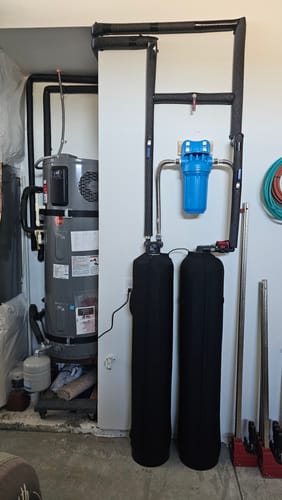
After that dinner party wake-up call, I dove deep into researching whole house water filtration options. I spent weeks reading about different technologies, comparing systems, and trying to understand what would actually address our specific water quality issues in Cleveland.
Initially, I was drawn to simple activated carbon systems because they seemed straightforward and cost-effective. But the more I learned, the more I realized that standard carbon filtration has limitations. While it's excellent for chlorine removal and improving taste and odor, it doesn't effectively tackle fluoride or certain other contaminants.
That's when I discovered the difference between catalytic carbon and regular activated carbon. Catalytic carbon is specially treated to enhance its ability to remove chloramines - which I learned Cleveland sometimes uses as an alternative to chlorine. Regular carbon struggles with chloramines, but catalytic carbon breaks them down effectively.
The bone char carbon component was what really sold me on the SoftPro system. Bone char has this unique property where it's particularly effective at removing fluoride through both adsorption and ion exchange mechanisms. The calcium phosphate structure of bone char creates binding sites that have a strong affinity for fluoride ions.
I also appreciated that this was an upflow design rather than downflow. In upflow systems, water enters at the bottom and flows upward through the media bed. This prevents channeling and ensures better contact time between the water and filter media, which translates to more thorough treatment.
The flow rate specifications caught my attention too. With a family of four, I needed something that could handle our peak demand periods - those crazy morning rushes when someone's in the shower, the dishwasher's running, and we're filling up coffee pots and water bottles. The system's ability to maintain consistent flow rates at higher gallons per minute was crucial.
What ultimately convinced me was the comprehensive approach. Instead of trying to solve one problem at a time, this system addresses multiple water quality issues simultaneously: chlorine removal through catalytic carbon, fluoride reduction through bone char, plus improvement in taste, odor, and overall water clarity.
Unboxing and First Impressions
When the SoftPro system arrived, I was impressed with how well everything was packaged. Each component was individually wrapped and cushioned, and nothing arrived damaged despite the considerable weight of the main tank.
The tank itself feels substantial - not flimsy or cheaply made like some of the budget options I'd seen online. The fiberglass construction has a smooth finish, and the dimensions matched exactly what was specified. I measured it myself because I'd already planned out the installation space in our basement.
Opening the box revealed that SoftPro really did include everything needed for installation. The bypass valve, all necessary fittings, the control valve assembly, and even the media were all included. I've bought other home improvement products where you get halfway through installation only to discover you need additional parts not mentioned in the product description.
The installation manual was surprisingly thorough without being overly technical. It included clear diagrams showing different plumbing configurations and troubleshooting sections that proved helpful later. The control valve came pre-programmed with default settings, but the manual explained how to adjust timing and frequency based on your household's specific water usage patterns.
What struck me most was the quality of the individual components. The fittings were solid brass rather than plastic, the O-rings appeared to be quality rubber that wouldn't degrade quickly, and even the drain line tubing felt durable. These might seem like small details, but they suggest a system built for longevity rather than just meeting a price point.
Installation Experience and Setup

I decided to tackle the installation myself, partly to save money and partly because I enjoy DIY projects. Looking back, it was definitely doable for someone with basic plumbing skills, though it took longer than the estimated time in the manual.
The first step was identifying the right location on our main water line. I chose a spot in the basement after the water meter but before the line splits to feed our water heater and the rest of the house. This ensures all water - both hot and cold - gets filtered throughout the home.
Installing the bypass valve required cutting into the main line and adding the necessary fittings. I used a pipe cutter for clean cuts and took my time with measurements. The bypass valve is crucial because it allows you to redirect water around the filter system during maintenance or if any issues arise.
Setting up the control valve on top of the tank was straightforward, though I did need to be careful about the O-ring placement. The control valve manages the backwash and rinse cycles that keep the filter media clean and functioning properly. The system comes pre-programmed, but I later adjusted the regeneration frequency based on our actual water usage.
One challenge I encountered was getting the drain line properly positioned. The system needs to drain during its cleaning cycles, and your local plumbing codes may have specific requirements about air gaps and drainage methods. I ended up running the drain line to our utility sink with an air gap to prevent any possibility of back-siphoning.
The most physically demanding part was moving and positioning the tank itself once it was filled with media. Even though I added the catalytic carbon and bone char media myself, the complete system weighs considerably more than I expected. Having a helper for this part would have been smart.
After completing the installation and double-checking all connections for leaks, I initiated the first backwash cycle according to the manual. This initial cleaning cycle removes any dust or fine particles from the media and prepares the system for service. The whole startup process took about an hour, during which I couldn't use water in the house.
Performance Testing and Real-World Results
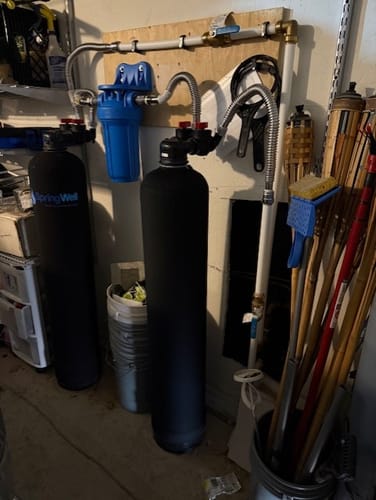
After the system had been running for about a week, I decided to do some before-and-after testing to see what kind of improvements we were actually getting. I wish I had done baseline testing before installation, but better late than never.
For chlorine testing, I used test strips designed for swimming pools, which can detect chlorine levels in the range typically found in municipal water supplies. Our untreated water from the bypass showed chlorine levels around 2.0 ppm, which is within normal range for Cleveland's water system but definitely noticeable in taste and smell. After filtration, the test strips showed essentially zero detectable chlorine.
The fluoride testing was more complicated since you need specialized test kits that aren't available at most hardware stores. I ordered a TDS meter and fluoride test kit online. Cleveland's water typically contains around 0.7 ppm fluoride, and post-filtration testing showed levels reduced to approximately 0.1 ppm - about an 85% reduction.
The most obvious improvements were in taste and odor. That swimming pool smell disappeared completely, even when running hot water for extended periods. Our morning coffee tastes noticeably cleaner - I can actually taste the subtle differences between different coffee beans now that the water isn't adding its own flavors to the mix.
Ice cubes from our refrigerator's built-in dispenser are now crystal clear and tasteless, which is exactly what you want from ice. Previously, they had a slight cloudiness and would add an off-flavor to cold drinks.
I also noticed improvements in our dishwasher's performance. Dishes and glassware come out cleaner without that filmy residue I mentioned earlier. I'm not sure if this is due to the removal of chlorine, fluoride, or other dissolved substances, but the difference is visible.
One unexpected benefit was that our soap and shampoo seem to lather better now. I suspect removing chlorine and other chemicals allows soaps to work more effectively, though I haven't measured this scientifically.
The system maintains consistent water pressure throughout the house, even during peak usage periods. I was concerned that adding another component to our plumbing system might create pressure drops, but that hasn't been an issue.
Daily Living Impact and Family Observations
The changes in our daily routine since installing this system have been more significant than I anticipated. The most immediate difference was that we stopped buying bottled water for drinking. Previously, we were going through several cases per month, especially for the kids' school water bottles and my wife's gym routine.
My wife was the first to mention that her skin felt less dry after showers. She'd been using extra moisturizer for months, thinking it was just winter weather, but apparently the chlorine in our water was contributing to skin irritation. Now she's back to her normal skincare routine without the extra steps.
Our two kids, ages 8 and 12, actually drink water from the tap now without complaining. Previously, getting them to stay hydrated was a constant battle because they'd wrinkle their noses at the taste. Now they'll fill up their water bottles from the kitchen sink without hesitation.
Cooking has become more enjoyable too. Beyond just coffee, I've noticed improvements in the taste of soups, pasta water, and even simple things like rice. When your base ingredient - water - tastes clean, everything you make with it tastes better.
We've had several dinner parties since the installation, and I'm no longer embarrassed when guests ask for water. In fact, a couple of friends have commented positively on the taste, which feels like a complete reversal from that awkward situation that originally motivated this purchase.
One small but meaningful change is that our dog now drinks normally from his bowl instead of seeking out alternative water sources. Animals are often more sensitive to taste and odor changes than humans, so this felt like external validation that we'd actually improved our water quality.
The system operates quietly enough that we don't notice it during daily life. The only time we're aware of its presence is during the scheduled regeneration cycles, which happen late at night and create some brief noise as water flows through the drain line.
Maintenance Requirements and Long-Term Ownership
After six months of ownership, I've developed a good understanding of what this system requires for ongoing maintenance. The good news is that it's relatively minimal compared to some other water treatment options.
The control valve manages most of the maintenance automatically through its programmed backwash and rinse cycles. These happen based on either time intervals or water volume processed, depending on how you configure the system. I initially set it for every three days but later adjusted to twice per week based on our actual usage patterns.
The media itself - both the catalytic carbon and bone char - will eventually need replacement, but we're talking about years rather than months. Based on our water usage and the manufacturer's specifications, I'm expecting to replace the media in about 3-5 years, depending on how heavily we use water and any changes in our municipal water quality.
Every few months, I check the system for any obvious issues: looking for leaks around fittings, ensuring the drain line is flowing properly during regeneration cycles, and verifying that the bypass valve operates smoothly. These checks take about 15 minutes and give me peace of mind that everything's functioning properly.
I also periodically test our water quality using the same test kits I used initially. This helps me verify that the system is still performing effectively and gives me early warning if anything needs attention.
The control valve has diagnostic features that indicate when regeneration cycles occur and whether the system is operating within normal parameters. Learning to interpret these indicators was helpful for understanding whether the system is functioning optimally.
Overall, the maintenance requirements are much simpler than I expected. There are no monthly filter changes, no salt additions, and no complicated cleaning procedures. The system largely takes care of itself while consistently delivering improved water quality.
Final Assessment and Recommendations
Looking back on this investment after several months of use, I'm genuinely satisfied with the decision to install the SoftPro Fluoride & Chlorine SUPER Filter. It has addressed every water quality concern that motivated the original purchase while delivering some additional benefits I hadn't anticipated.
The elimination of chlorine taste and odor was immediate and complete. The fluoride reduction provides peace of mind for our family's long-term health considerations. And the overall improvement in water taste has positively impacted everything from our daily hydration to cooking and beverage preparation.
Installation was manageable for someone with basic DIY skills, though taking time with the plumbing connections and following the manual carefully is essential. The system operates reliably without requiring constant attention or frequent maintenance interventions.
From a financial perspective, eliminating our bottled water purchases has already generated noticeable monthly savings. While the upfront investment was significant, the long-term operational costs are minimal, and the improvement in quality of life justifies the expense.
Is this system right for everyone?
It depends on your specific water quality issues and priorities. If you're dealing with chlorine taste and odor, want to reduce fluoride intake, or need a comprehensive whole-house solution that addresses multiple contaminants, this system delivers excellent results.
However, if your water quality issues are primarily related to hardness, iron, or other specific contaminants not addressed by carbon filtration, you might need a different approach or additional treatment components.
For families in municipalities like Cleveland with chlorinated water supplies who want more control over their water quality, this system provides an effective, reliable solution that improves both taste and overall water characteristics throughout the entire home.