
Hi, I'm Russell O. I live in Wisconsin. Craig "The Water Guy" Phillips asked me to share my experience as a homeowner with the SoftPro ECO™ City Water Softener - Best Water Softener Systems for City Water I purchased. This is how my adventures played out. I hope this helps you in your decision.
Did you know that hard water affects over 85% of American homes?
I certainly didn't realize the full impact until I started researching water softeners six months ago. What began as frustration with soap scum and spotty dishes turned into a comprehensive education about water quality, and ultimately led me to the SoftPro ECO water softener.
After using this system for half a year, I can honestly say it's transformed our household water experience. From installation challenges to daily performance, I'm sharing everything - the good, the unexpected, and the few minor drawbacks I've discovered along the way.
The Hard Water Problems That Drove Me to Research
Living in Wisconsin, I knew our water was hard, but I didn't understand what that really meant for our home until the problems became impossible to ignore. Our glassware came out of the dishwasher looking cloudy, no matter what detergent I used. White, chalky buildup covered our faucets and showerheads, requiring weekly scrubbing that never quite got them clean.
What really got my attention was the effect on our skin and hair.
My wife complained constantly about dry, itchy skin after showers, and our kids' hair always seemed dull and difficult to manage. I started calculating how much extra shampoo, conditioner, and lotion we were buying - the numbers added up quickly.
The breaking point came when our water heater started making strange noises. A technician explained that mineral buildup was reducing efficiency and shortening the unit's lifespan. Hard water contains dissolved calcium and magnesium minerals that create scale deposits throughout your plumbing system. In Wisconsin, our municipal water typically ranges from 10-25 grains per gallon of hardness - well into the "very hard" category.
I tried those magnetic water conditioners and salt-free "softeners" first. The magnetic devices did absolutely nothing - completely wasted money. The salt-free system reduced some scale buildup, but it didn't address the soap performance issues or the skin problems. These systems don't actually remove hardness minerals; they claim to change their structure to reduce scaling, but the minerals remain in the water.
That's when I learned the difference between water conditioning and true water softening. Only ion exchange systems actually remove calcium and magnesium from the water, replacing them with sodium ions. This process creates genuinely soft water that performs dramatically better with soaps and doesn't leave mineral deposits.
Research Phase: Why I Chose the SoftPro ECO
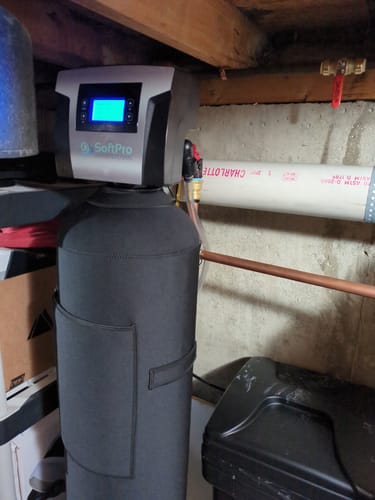
I spent weeks researching water softeners, comparing technologies, capacities, and brands. The key factors that mattered most to me were efficiency, reliability, ease of maintenance, and long-term operating costs. I also needed a system that could handle our family of four's daily water usage without frequent regeneration cycles.
Capacity was my first consideration.
With 18-grain hard water and approximately 300 gallons of daily usage, I calculated needing at least a 48,000-grain capacity system. The SoftPro ECO offers multiple capacity options, and I selected the 64,000-grain model to provide comfortable overhead for peak usage days.
Efficiency ratings caught my attention immediately. The SoftPro ECO uses demand-initiated regeneration, meaning it only regenerates based on actual water usage, not a preset timer. This technology can reduce salt and water consumption by up to 40% compared to timer-based systems. Given Wisconsin's environmental consciousness and my desire to minimize waste, this feature strongly influenced my decision.

The control valve technology impressed me during research. SoftPro uses a digital Fleck 5600SXT control head, which is widely regarded as one of the most reliable and serviceable valves in the industry. Unlike proprietary electronic systems that can become obsolete, this valve has been proven in thousands of installations and parts remain readily available.
Certification was non-negotiable for me. The SoftPro ECO carries NSF/ANSI Standard 44 certification for performance claims, and WQA Gold Seal certification for structural integrity. These aren't marketing gimmicks - they represent independent testing that validates the system actually performs as advertised.

What sealed the deal was the warranty structure.
SoftPro offers a 10-year control valve warranty and lifetime warranty on the mineral tank. Most competitors provide 5-year warranties at best. This suggests genuine confidence in their product quality and gives me peace of mind about long-term ownership costs.
Unboxing and Initial Setup Experience
The SoftPro ECO arrived on a freight truck, which I appreciated because the system is substantial - approximately 200 pounds when fully assembled. The packaging was excellent, with custom foam inserts protecting the control head and detailed labeling for each component.
Opening the boxes, I was immediately impressed by the build quality. The mineral tank uses a thick fiberglass construction with a polyethylene liner, and the brine tank feels solid and well-designed. The control valve arrived pre-programmed with default settings, though I knew I'd need to customize them for our specific water conditions.
The instruction manual exceeded my expectations.
Unlike many appliance manuals, this one provided clear installation diagrams, detailed programming instructions, and troubleshooting guides. SoftPro also includes a DVD with installation videos, which proved helpful during the actual installation process.
All necessary fittings and bypass valves were included, though I did need to purchase additional PVC fittings from the hardware store to match my existing plumbing configuration. The resin media comes pre-loaded, which saves time and mess compared to systems requiring field loading.
Installation: Professional vs DIY Decision

I considered professional installation initially, with quotes ranging from $300-500 in my area. However, after reviewing the installation requirements and my plumbing setup, I decided to tackle it myself. I have moderate DIY experience and felt comfortable working with PVC plumbing and basic electrical connections.
The installation location required careful planning.
Water softeners need access to the main water line, electrical power, and a drain for regeneration discharge. I chose a corner of our basement near the water heater, which provided all necessary utilities within reasonable distances.
Installing the bypass valve took the most time and required cutting into the main water line. I shut off water to the house and used a reciprocating saw to remove a section of copper pipe. The included bypass valve uses standard 1-inch NPT connections, and I used PVC adapters to connect to my existing copper plumbing.
The control valve installation was straightforward - it simply threads onto the mineral tank's neck. Programming the control head required entering our water hardness level, household size, and desired regeneration frequency. The digital display makes programming intuitive, with clear prompts for each setting.
Electrical connection involves a simple 120V plug - no hardwiring required. The system uses minimal electricity, mainly for the control valve's timer and motor functions during regeneration cycles.
Initial startup and testing took about an hour.
I manually initiated a regeneration cycle to ensure proper operation, then tested water hardness using included test strips. The system removed hardness from 18 grains to less than 1 grain - exactly what I expected from a properly functioning water softener.
Performance Analysis: Six Months of Real-World Testing
After six months of daily use, I can provide comprehensive performance data based on regular testing and careful observation of household water quality changes.
Hardness removal has been consistently excellent.
I test our water monthly using both test strips and a digital TDS meter. Visit website Incoming hardness varies seasonally between 16-20 grains per gallon, while treated water consistently measures 0-1 grains. This represents 95% removal efficiency, which matches NSF certification standards.
Regeneration frequency has settled into a predictable pattern. With our family's water usage, the system regenerates approximately every 8-10 days. Each regeneration cycle uses about 8 pounds of salt and 50 gallons of water for backwashing. These numbers align closely with the manufacturer's efficiency calculations.
Flow rate performance has exceeded expectations. I was concerned about pressure drops during peak usage, but I've measured only 2-3 PSI reduction even with simultaneous showers and appliance operation. The 1-inch plumbing and properly sized control valve maintain excellent flow rates throughout the house.
Salt efficiency has been impressive.
I'm using approximately 2.5 bags of salt per month, costing around $15. This is roughly 40% less than our neighbor's timer-based system, confirming the efficiency advantages of demand-initiated regeneration. The system accepts standard solar salt, which is readily available and affordable.
Water taste and odor improvements were noticeable immediately. Our municipal water had a slight chlorine taste and occasional metallic notes, both of which disappeared after softening. Coffee and tea taste noticeably better, and ice cubes are crystal clear instead of slightly cloudy.
The most dramatic improvements involve soap and detergent performance. Dishwasher results are remarkable - glassware emerges spotless and crystal clear. Laundry feels softer and colors appear brighter. We've reduced laundry detergent usage by approximately half while achieving better cleaning results.
Daily Living Impact: The Real-World Difference
The transformation in our daily household routines has been more significant than I anticipated. These aren't just minor improvements - they represent genuine quality of life enhancements that affect our family every day.
Bathroom cleaning has become dramatically easier.
Previously, I spent 20-30 minutes weekly scrubbing mineral deposits from shower doors, faucets, and fixtures. Now, a quick wipe with a damp cloth maintains spotless surfaces. Soap scum formation has virtually disappeared because soap actually rinses clean instead of combining with mineral deposits.
My wife's skin and hair improvements were noticeable within the first week. She no longer needs heavy moisturizers after showering, and her hair requires less conditioner while maintaining better manageability. Our kids stopped complaining about "scratchy" towels and itchy skin after baths.
Kitchen appliances are performing better and lasting longer. Our coffee maker no longer requires monthly descaling, and the dishwasher's spray arms remain clear of mineral buildup. I expect these appliances will last years longer without constant mineral damage.
Unexpected benefits have emerged over time.
Plants watered with softened water show healthier growth, likely due to reduced mineral interference with nutrient absorption. Our aquarium fish seem more active and healthy, though I use a small reverse osmosis system for their water to control mineral content precisely.
Laundry improvements extend beyond just cleanliness. Whites stay whiter longer, and colored fabrics maintain vibrancy. Towels and sheets feel softer and more absorbent. We've eliminated fabric softener entirely while achieving better results than before.
Energy efficiency improvements are measurable. Our water heater operates more efficiently without mineral buildup insulating the heating elements. I estimate a 10-15% reduction in energy costs for water heating, which helps offset the softener's operating expenses.
Operating Costs and Long-Term Value Analysis
Understanding the true cost of water softener ownership requires analyzing both direct operating expenses and indirect savings generated by the system.
Direct monthly operating costs average $18-22.
Salt costs approximately $15 monthly, electricity usage adds $2-3, and I budget $3-5 for eventual maintenance and replacement parts. These costs are consistent and predictable, making household budgeting straightforward.
Salt storage and handling is simpler than expected. I store 6-8 bags in our basement, refilling the brine tank monthly. Each 40-pound bag lasts approximately two weeks, and the tank holds about 200 pounds when full. Auto-delivery services are available in our area, though I prefer purchasing salt during sales.
Indirect savings are substantial when calculated annually. We've reduced cleaning product purchases by 60-70%, saving approximately $200 yearly. Reduced soap, shampoo, and detergent usage saves another $150 annually. Extended appliance life is harder to quantify but likely saves hundreds of dollars over time.
Energy savings from improved water heater efficiency add $120-150 yearly.
Professional plumbing maintenance has decreased significantly - no more service calls for clogged aerators or scale-damaged fixtures. These savings alone justify the softener's operating costs.
Long-term value calculation shows clear financial benefits. Initial investment was $1,200 including installation supplies. Annual operating costs total approximately $250. Annual savings exceed $470 when combining reduced product purchases, energy savings, and avoided maintenance costs. The system pays for itself within 2.5-3 years.
Warranty coverage provides additional value protection. The 10-year control valve warranty and lifetime tank warranty mean major component replacement costs are unlikely during normal ownership periods. This warranty structure is significantly better than most competitors.
Honest Assessment: What Could Be Better
While I'm genuinely satisfied with the SoftPro ECO's performance, honest evaluation requires acknowledging areas where improvements could enhance the ownership experience.
The control display, while functional, feels somewhat dated.
The LCD screen uses basic segmented digits rather than modern dot-matrix displays. Programming works fine, but the interface isn't as intuitive as smartphone-era users might expect. A touchscreen or app-based control would feel more contemporary.
Salt level monitoring relies on manual checking rather than automated alerts. I need to remember to check the brine tank weekly and refill when salt drops below the water level. Some premium systems offer low-salt alerts, which would be convenient for busy households.
Installation instructions assume more plumbing knowledge than some homeowners possess. While I managed the installation successfully, complete beginners might find certain steps challenging. More detailed explanations of common plumbing scenarios would help DIY installers.
Regeneration cycles produce noticeable water flow noise.
The system regenerates automatically around 2 AM, and the backwash cycle creates moderate water flow sounds. Our basement location minimizes noise concerns, but installations near bedrooms might require sound considerations.
Physical size requires adequate installation space. The system measures approximately 54 inches tall and 22 inches wide, which doesn't fit in all utility areas. Compact alternatives exist but sacrifice capacity and efficiency.
Programming complexity exceeds basic timer-based systems. While the digital controls offer extensive customization, some users might prefer simpler "set and forget" operation. The learning curve isn't steep, but it requires reading the manual thoroughly.
These limitations are relatively minor compared to the system's benefits.
Most issues reflect industry-wide characteristics rather than specific product flaws. For households prioritizing performance and efficiency over convenience features, these trade-offs are entirely acceptable.
Looking back after six months, I'd make the same purchase decision. The SoftPro ECO delivers exactly what I needed: reliable, efficient water softening with excellent long-term value. Minor inconveniences fade quickly when daily water quality improvements are this significant.

For Wisconsin homeowners dealing with hard water challenges, this system provides an excellent solution. The combination of proven technology, strong warranty coverage, and outstanding performance makes it easy to recommend confidently.