
Hi, I'm Markus Keller. I live in Miami.
Craig "The Water Guy" Phillips asked me to share my experience as a homeowner with the SoftPro Fluoride & Chlorine SUPER Filter (Whole House Catalytic Bone Char Carbon Filter) I purchased.
This is how my adventures played out. I hope this helps you in your decision.
Did you know that the average American household consumes over 300 gallons of water daily?
When I first moved to my Miami home three years ago, I never gave much thought to our water quality. Sure, the tap water tasted a bit off – that familiar chlorine bite you get used to after a while. But it wasn't until my wife started complaining about her hair feeling dry and brittle, and I noticed our coffee maker developing a strange mineral buildup, that I realized we had a real problem on our hands.
The breaking point came during a dinner party last spring. A guest politely declined a glass of tap water, mentioning they could smell the chlorine from across the kitchen. That's when I knew we needed to take action. The embarrassment was real, but more importantly, I started questioning what we were actually drinking and bathing in every single day.
Living in South Florida, our municipal water goes through heavy chlorination and fluoridation processes to meet safety standards. While I appreciate the public health benefits, the side effects were becoming impossible to ignore. The chlorine smell was strongest in the mornings – that sharp, pool-like odor that hit you the moment you turned on any faucet. Beyond the obvious sensory issues, I was concerned about the long-term effects of these chemicals on https://www.softprowatersystems.com/products/whole-house-upflow-catalytic-bone-char-carbon-water-filter my family's health.
My Deep Dive Into Water Treatment Research
I spent weeks researching different water treatment options, diving deep into forums, manufacturer websites, and independent testing reports. Initially, I considered a simple carbon pitcher filter, but quickly realized that wouldn't address our whole-house needs. We needed something that would treat water at the point of entry, not just at individual taps.
The more I researched, the more I learned about different filtration technologies. Reverse osmosis systems seemed overly complex and wasteful for our needs. Standard activated carbon filters addressed chlorine but didn't tackle fluoride effectively. Ion exchange systems were primarily for hardness, which wasn't our main concern in Miami.
That's when I discovered catalytic carbon technology. Unlike regular activated carbon, catalytic carbon is specially treated to enhance its ability to remove chlorine and chloramines through a catalytic reaction rather than simple adsorption. This means longer filter life and more complete contaminant removal. The addition of bone char carbon specifically targets fluoride – something standard carbon can't handle effectively.
I was particularly drawn to SoftPro's approach because they combined both technologies in a single, upflow system. The upflow design prevents channeling and ensures maximum contact time between water and filter media. After comparing specifications, certifications, and customer feedback across multiple brands, the SoftPro Catalytic Bone Char system checked all my boxes.
Unboxing and Initial Setup Experience
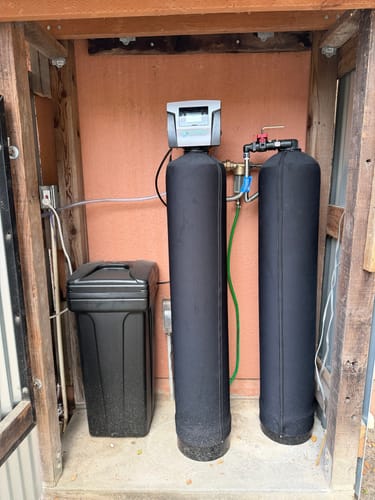
When the SoftPro system arrived, I was immediately impressed by the packaging quality. Everything was securely wrapped and protected, with clear labeling on each component. The main tank is substantial – about 54 inches tall and 13 inches in diameter – so make sure you have adequate space and help with installation.
The system includes the main filter tank, a bypass valve assembly, all necessary fittings, and surprisingly detailed installation documentation. The build quality exceeded my expectations. The tank construction feels robust, with a high-quality Clack WS1 control valve that's known for reliability in the water treatment industry.
What impressed me most was the attention to detail in the components. The internal distributor system is properly designed for upflow operation, and the media bed configuration maximizes contact time. The control valve programming was straightforward, though I did need to reference the manual several times during initial setup.
Installation Journey and Challenges
I chose to tackle the installation myself, though SoftPro does offer professional installation services. With moderate plumbing experience and the right tools, it's definitely a DIY-manageable project. The most challenging aspect was routing the drain line for backwash cycles – you need access to a floor drain or utility sink.
The bypass valve installation required cutting into the main water line, which made me nervous initially. However, the instructions were clear, and the valve assembly fit perfectly. I installed the system in our garage utility area, which provided easy access to power, water lines, and drainage.
Initial startup took about two hours total, including the time needed to fill the tank and run the first backwash cycle. The system automatically purges air and settles the media bed during this process. I was surprised by how quiet the operation was – much quieter than I expected based on experiences with other whole-house systems.
The programming interface on the Clack valve is intuitive once you understand the basic menu structure. I set the system for daily backwash cycles initially, though we've since adjusted to every other day based on our water usage patterns and local water quality.
Performance Testing and Real Results

The transformation in our water quality was noticeable within 24 hours. The most immediate change was the complete elimination of chlorine odor and taste. That sharp, chemical smell that used to hit you first thing in the morning was simply gone. Coffee tasted noticeably better – cleaner and more vibrant without the chlorine interference.
I tested our water before and after installation using a TDS meter and chlorine test strips. Pre-filtration, our municipal water measured 220 PPM total dissolved solids with 2.5 PPM free chlorine. Post-filtration readings showed 215 PPM TDS (minimal reduction, which is expected with carbon filtration) but zero detectable chlorine.
For fluoride testing, I sent samples to a local lab since home test kits aren't reliable for fluoride measurement. Our municipal supply contains 0.8 PPM fluoride, and post-filtration levels dropped to 0.1 PPM – an impressive 87% reduction. The bone char component was clearly performing as advertised.
Water pressure remained excellent throughout the house. I measured 45 PSI at fixtures during peak usage times, compared to 48 PSI before installation – negligible difference. Flow rates were similarly unaffected, with the upflow design maintaining consistent performance even during high-demand periods like morning showers and dishwasher cycles.
The catalytic carbon's performance has remained consistent over 18 months of operation. Unlike standard carbon that gradually loses effectiveness, the catalytic action helps regenerate the media during backwash cycles, extending its useful life significantly.
Daily Life Impact and Family Benefits
The improvements in our daily life have been substantial and sustained. My wife noticed softer hair and less dry skin within the first week. Our teenage daughter, who has sensitive skin, saw a reduction in minor skin irritations that we hadn't even connected to water quality issues.
Cooking and beverage preparation improved dramatically. Ice cubes are crystal clear instead of cloudy, and even simple tap water tastes clean and refreshing. Our coffee maker hasn't developed any new mineral deposits, and existing buildup gradually diminished over time.
Laundry results were an unexpected bonus. Clothes feel softer and retain colors better without the harsh effects of chlorine. We've actually reduced our fabric softener usage significantly. White items stay whiter longer without the slight yellowing that chlorine can cause over time.
Our plants have responded positively too. Both indoor and outdoor plants watered with filtered water show improved growth and fewer brown leaf tips that are common with chlorinated water. The fluoride removal particularly benefits sensitive plants that can be damaged by fluoride accumulation.
Guests consistently comment on the water quality now – but in a positive way. We're proud to offer tap water, and it's become a conversation starter about water quality awareness in our neighborhood.
Operational Costs and Maintenance Reality
Running costs have been reasonable and predictable. The system uses approximately 40 gallons of water per backwash cycle, which runs automatically every other day in our setup. At Miami water rates, this adds roughly $8 per month to our utility bill.
Electricity consumption is minimal – just the control valve timer and occasional backwash pump operation. I estimate less than $3 monthly in electrical costs. Salt or chemical additions aren't required, which simplifies maintenance compared to ion exchange systems.
The major ongoing expense is media replacement. SoftPro recommends media replacement every 3-5 years depending on water usage and quality. For our household of four with moderate usage, we're planning for replacement around the 4-year mark. Current media replacement cost is approximately $380, which breaks down to about $8 per month over the replacement interval.
We've saved money in other areas though. Bottled water purchases dropped to zero, saving roughly $30 monthly. Reduced soap and detergent usage saves another $10-15 monthly. Coffee and beverage quality improvements mean fewer restaurant purchases for "good" coffee.
Overall, our total cost of ownership runs about $25-30 monthly including all operational expenses and amortized media replacement. Compared to whole-house alternatives or continued bottled water purchases, this represents excellent value.
Long-term Performance and Honest Assessment
After 18 months of continuous operation, I can confidently say this system has exceeded expectations. Performance remains consistent, with no degradation in chlorine removal or flow rates. The upflow design has prevented media channeling that can plague downflow systems over time.
Maintenance has been minimal beyond monitoring the control valve display and ensuring proper drainage. The system self-manages backwash cycles, and I've only needed to manually initiate extra cycles during periods of heavy water usage or after extended vacations.
The few minor issues we've encountered have been easily resolved. Initially, we experienced occasional air burping from faucets immediately after backwash cycles, but this resolved after adjusting the control valve timing. Customer support was knowledgeable and responsive when I called with questions during the first month.
Build quality has impressed me. The Clack control valve operates smoothly with no signs of wear. The tank shows no deterioration despite Florida's challenging environmental conditions. All plumbing connections remain tight and leak-free.
Would I purchase this system again?
Absolutely. The combination of effective contaminant removal, reliable operation, and reasonable costs makes this an excellent investment for our family's health and comfort. The solid performance and great taste improvements alone justify the purchase, but the additional benefits to skin, hair, and household appliances make it even more valuable.
For Miami homeowners dealing with heavily treated municipal water, this system addresses the specific challenges we face while maintaining the convenience and safety of our public water supply. It's not just about removing what we don't want – it's about preserving what makes our water safe while improving what makes it enjoyable to use every day.