
Hi, I'm Randy W.. I live in Wisconsin.
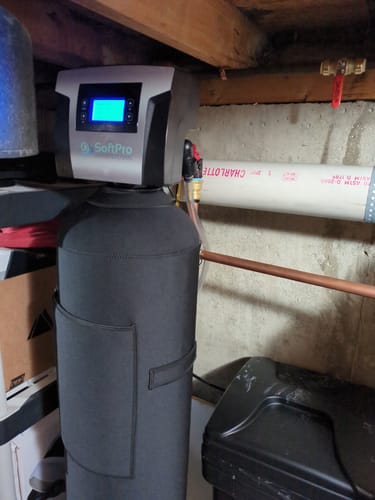
Craig "The Water Guy" Phillips asked me to share my experience as a homeowner on Iron Filter with the SoftPro Iron Master AIO - Best Iron Filter for Well Water [Air Injected Water Filter / Katalox] I purchased.
This is how my adventures played out. I hope this helps you in your decision.
Why I Desperately Needed an Iron Filter Solution
Did you know that over 25% of private wells in Wisconsin contain iron levels above EPA recommendations?
I discovered this the hard way when my family moved to our rural property outside Madison eight months ago. What started as excitement about well water independence quickly turned into frustration as orange stains appeared on everything - our white porcelain fixtures, laundry, and even our coffee maker developed that metallic, rusty taste that made morning routines unbearable.
Our well water tested at 4.2 PPM (parts per million) of iron, which doesn't sound like much until you realize the EPA secondary standard recommends staying below 0.3 PPM for aesthetic reasons. We were dealing with over 13 times the recommended level, and it showed in every aspect of our daily water use.
The real wake-up call came when our plumber informed us that the orange buildup in our fixtures wasn't just cosmetic - iron bacteria was likely forming biofilms in our plumbing system, potentially affecting water quality and creating expensive maintenance issues down the road. Our dishwasher already showed signs of iron staining on the heating element, and I calculated we were spending nearly $40 monthly on bottled water just to avoid the metallic taste.
My Research Journey Into Iron Filtration Technology
Before diving into any purchase, I spent three weeks researching iron removal methods. The learning curve was steeper than expected, but I discovered there are essentially three main approaches: sediment filtration (for ferric iron), water softening (limited effectiveness), and oxidation followed by filtration.
Traditional sediment filters only work on ferrous iron that's already oxidized, which wasn't our primary issue. Our water ran clear from the tap but turned orange within minutes of exposure to air, indicating we had dissolved ferrous iron that needed oxidation first.
Water softeners can handle some iron through ion exchange, but most manufacturers void warranties when iron levels exceed 1-2 PPM. At 4.2 PPM, this wasn't a viable long-term solution, plus it would require frequent resin bed cleaning and shortened equipment life.
The oxidation approach made the most scientific sense for our situation. By introducing oxygen (through air injection) or chemical oxidants, dissolved ferrous iron converts to ferric iron particles that can then be filtered out. This led me to research air injection systems, which seemed more environmentally friendly than chemical oxidation methods.
I compared several technologies including manganese dioxide catalytic media, chlorine injection systems, and air injection with various filter media types. The Katalox media caught my attention because it combines catalytic oxidation properties with direct filtration capability, potentially handling both the oxidation and removal steps in one tank.
Why I Chose the SoftPro Iron Master System
After requesting quotes from five different companies, the SoftPro Iron Master AIO stood out for several key reasons. First, the air injection design meant no ongoing chemical costs - just electricity to run the air compressor and occasional media replacement.
The Katalox media was the deciding factor. Unlike traditional greensand that requires potassium permanganate regeneration, Katalox acts as both an oxidant and filter media. It's NSF certified for iron removal and has a longer service life than conventional media types. The manufacturer specs showed it could handle up to 15 PPM iron, giving us substantial headroom above our 4.2 PPM levels.
System sizing was crucial for our household of four with moderate to high water usage. The Iron Master AIO comes in different tank sizes, and SoftPro's technical support helped calculate our needs based on peak flow rates and iron loading. We selected the 10" x 54" tank configuration, providing 8 GPM service flow rate with adequate contact time for oxidation.
The control valve was another advantage - a Fleck 5600SXT with customizable programming for backwash frequency based on actual iron loading rather than just time intervals. This meant more efficient operation and longer media life compared to basic timer-only systems.
Cost-wise, the complete system including air injection assembly, control valve, and Katalox media came to $1,847 delivered. While not the cheapest option, it was competitively priced against comparable systems and included 10-year tank warranty plus 5-year control valve coverage.
Unboxing and Initial Setup Experience

The system arrived in two packages - the main tank assembly and a separate air injection kit. Everything was well-packaged with protective foam, and nothing was damaged during shipping. The fiberglass tank felt substantial and well-constructed, with smooth interior coating and quality fittings.
What impressed me immediately was the completeness of included components. The air injection assembly came pre-assembled with pressure tank, air valve, and connecting tubing. All plumbing fittings, bypass valve, and even pipe thread compound were included. The only additional purchases needed were pipe sections for our specific installation layout.
Documentation quality exceeded expectations. The installation manual included clear diagrams for different plumbing configurations, electrical requirements, and programming instructions for the control valve. SoftPro also provides access to video tutorials, which proved invaluable during setup.
One minor surprise was the physical footprint. While I had the dimensions, seeing the complete system emphasized the space requirements. The main tank plus air injection components needed approximately 24" x 30" of floor space, plus clearance for plumbing connections and future service access.
Installation Process and Initial Challenges
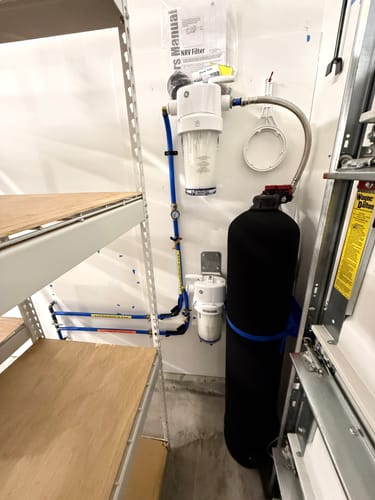
I opted for professional installation despite being fairly handy, mainly due to the electrical requirements and wanting warranty protection. The certified installer took approximately 4 hours to complete the job, which included relocating some existing plumbing to accommodate the bypass valve system.
Pre-installation requirements included a 110V electrical outlet within 6 feet of the control valve, adequate floor drainage for backwash discharge, and 18" clearance above the tank for eventual media replacement. Our basement layout required running a new drain line approximately 15 feet to reach the existing floor drain.
The air injection system installation was straightforward - the pre-assembled unit mounted to the wall near the main tank with minimal plumbing connections. The installer explained that proper air-to-water ratio is critical for effective iron oxidation, and the system automatically adjusts injection based on water flow demand.
Initial startup involved programming the control valve for our water conditions. Based on our 4.2 PPM iron level and calculated daily water usage, the installer set backwash cycles for every 3 days initially, with plans to adjust based on actual performance. The first backwash cycle showed significant orange discharge, confirming the system was effectively capturing oxidized iron.
One challenge emerged during the first week - occasional air spitting from faucets, especially during low-flow conditions. This required fine-tuning the air injection rate and adding an additional air separator in the downstream plumbing. The installer returned at no charge to make these adjustments.
Real-World Performance and Measurable Results
After eight months of operation, the results have been transformative. Within 48 hours of installation, the metallic taste completely disappeared from our drinking water. More importantly, we stopped seeing orange staining on fixtures, and existing stains gradually faded with regular cleaning.
I've tested water quality monthly using both home test strips and quarterly laboratory analysis. Iron levels consistently test below 0.1 PPM post-filtration, representing over 95% removal efficiency. The catalytic action of Katalox media has remained consistent, with no degradation in performance over our usage period.
Flow rate performance has exceeded expectations. Even during peak demand periods - simultaneous shower, dishwasher, and laundry - we maintain 6-7 GPM at fixtures with minimal pressure drop. The 8 GPM system rating proved accurate for real-world conditions.
The air injection system has operated reliably with minimal maintenance. The small air compressor cycles on demand and is quieter than anticipated - barely noticeable from upstairs living areas. Power consumption averages about 15 kWh monthly based on our usage patterns.
Backwash cycles have stabilized at every 4-5 days, longer intervals than initially programmed. The control valve's gallons-based programming means backwash frequency adjusts automatically based on actual iron loading rather than arbitrary time schedules. Each cycle uses approximately 150 gallons over 45 minutes - a reasonable consumption for the treatment capacity provided.
Ongoing Costs and Maintenance Reality
Operational costs have been lower than expected. Monthly electricity for the air compressor and control valve totals about $3-4 based on our local rates. No chemical additives are required, unlike chlorine injection or potassium permanganate systems.
The major ongoing expense is eventual media replacement. Katalox media typically lasts 8-10 years in residential applications, depending on iron loading and water chemistry. Replacement cost is approximately $300-400 including shipping, which works out to roughly $3-4 monthly when amortized over media life.
Routine maintenance is minimal but important. I check the air injection pressure monthly and drain accumulated moisture from the pressure tank quarterly. The control valve requires no regular maintenance beyond occasional cleaning of the injector screen during backwash cycles.
Annual maintenance includes testing water quality, inspecting electrical connections, and verifying proper backwash operation. I also monitor iron breakthrough by checking for any return of metallic taste or fixture staining. So far, performance has remained consistent with no signs of media exhaustion.
Comparing total ownership costs to our previous situation, we're saving approximately $40 monthly on bottled water, plus avoiding potential appliance damage from continued iron exposure. The system should pay for itself within 4-5 years through direct savings and avoided replacement costs.
Final Assessment and Honest Recommendations
Eight months into ownership, the SoftPro Iron Master has solved our iron problem completely. The transformation from orange-stained fixtures and metallic-tasting water to crystal-clear, odorless water has been remarkable. Family members frequently comment on improved taste for coffee and cooking applications.
The air injection approach proved ideal for our situation - no ongoing chemical costs, environmentally friendly operation, and excellent performance consistency. Katalox media has lived up to its reputation for effective iron removal without the maintenance requirements of traditional media types.
This system is perfect if you have: Iron levels between 1-10 PPM, adequate space for tank installation, 110V electrical access, and preference for chemical-free treatment. Households with moderate to high water usage will appreciate the flow rate capacity and efficient backwash programming.
Consider alternatives if you have: Very low iron levels (under 1 PPM) where simple sediment filtration might suffice, extremely limited installation space, or iron levels above 10 PPM requiring more aggressive treatment methods.
Installation complexity requires professional service unless you're experienced with plumbing and electrical work. iron well water filter The investment is substantial but justified by performance results and long-term operational savings.
Would I purchase this system again? Absolutely. The combination of effective treatment, reasonable operating costs, and reliable performance makes it an excellent value for households dealing with significant iron contamination. The peace of mind from consistently clean, great-tasting water has been worth every dollar invested.