
Hi, I'm George K.. I live in Kansas.
Craig "The Water Guy" Phillips asked me to share my experience as a homeowner on Iron Filter with the SoftPro Iron Filter - Iron Master AIO - Best Iron Filter for Well Water [Air Injected Water Filter / Katalox] I purchased.
This is how my adventures played out. I hope this helps you in your decision.
Did you know that over 25% of American households rely on well water, and iron contamination affects roughly 15% of private wells across the country?
I never thought I'd become an expert on iron filtration, but here I am, six months into ownership of the SoftPro Iron Master AIO, writing about water chemistry like it's my hobby. The truth is, when your well water turns everything orange and leaves metallic stains on everything it touches, you either become an expert or you live with the problem forever.
My journey with iron-contaminated well water started when we moved to our rural Kansas property three years ago. What began as slightly discolored water gradually became a household nightmare that affected everything from our morning coffee to our white laundry. After trying multiple solutions that failed to deliver, I finally invested in the Iron Master AIO system – and I'm here to share exactly what that experience has been like.
This isn't a quick "it works great" review. I'm going to walk you through the real installation process, the actual performance over months of use, the costs you don't expect, and the honest limitations I've discovered. If you're dealing with iron water issues and considering this system, you'll know exactly what you're getting into by the end of this review.
The Iron Water Problem That Drove Me to Find a Solution
Let me paint you a picture of what iron-contaminated well water actually does to your daily life, because until you live with it, you don't really understand the scope of the problem.
Our well water tested at 4.2 PPM (parts per million) of iron, which doesn't sound like much until you realize that anything over 0.3 PPM is considered problematic by EPA standards. The iron in our water was primarily ferrous iron – the dissolved, invisible kind that turns into rusty, ferric iron when exposed to oxygen.
Every morning, I'd run the kitchen faucet and watch crystal-clear water pour out. Within seconds of hitting the air, it would start developing a yellowish tint. By the time I filled a glass, there was a noticeable metallic taste. Leave that same water sitting for an hour, and it would turn completely orange with iron precipitate settling at the bottom.
The staining was relentless. Our toilets developed permanent orange rings that no amount of scrubbing could remove. The shower walls looked like they were painted with rust. My white work shirts came out of the washing machine with yellow-brown stains that set permanently into the fabric. We were buying bottled water for drinking and cooking, which was costing us nearly $80 per month.
But the real wake-up call came when our plumber showed me the inside of our water heater during a routine maintenance visit. The heating elements were coated in thick, orange scale, and he warned me that we'd need replacement elements within a year if we didn't address the iron problem. Between potential appliance damage, clothing replacement, and bottled water costs, our iron problem was becoming expensive.
I tried a basic sediment filter first – a $150 solution that captured exactly zero iron because ferrous iron is dissolved, not suspended. Then I attempted a water softener approach, thinking it might help. It reduced the iron slightly but created a new problem: slimy, over-softened water that felt terrible and still stained.
That's when I started researching dedicated iron filtration systems and discovered that iron removal requires oxidation – converting dissolved ferrous iron into filterable ferric iron. This led me to air injection systems and ultimately to the Iron Master AIO.
Research Phase: Why I Chose the Iron Master AIO
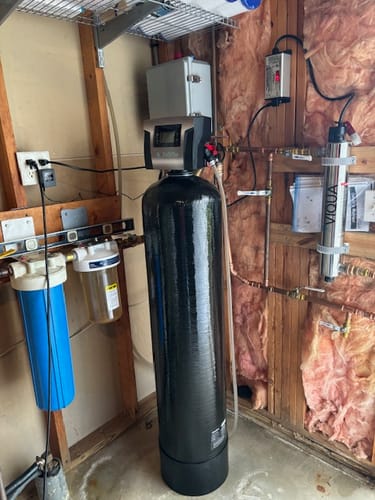
After my failed attempts with basic filtration, I spent weeks researching iron removal technologies. I quickly learned that effective iron removal requires a multi-step process: oxidation, precipitation, and filtration.
I evaluated three main approaches: chlorine injection systems, ozone systems, and air injection systems. Chlorine injection was effective but meant dealing with chlorine storage and the potential for over-chlorination. Ozone systems were powerful but required more maintenance and higher energy costs. Air injection appealed to me because it uses only air – no chemicals, no ongoing consumables beyond the filter media.
The Iron Master AIO caught my attention because it combines air injection with Katalox media in a single tank. Traditional air injection systems often require separate oxidation and filtration tanks, which meant more space and higher costs. The "All-In-One" design promised to handle oxidation and filtration in one compact unit.
I researched the Katalox media extensively. It's a catalytic filtration medium that not only filters oxidized iron but also helps with the oxidation process itself. Unlike traditional filter media that just captures contaminants, Katalox actively participates in iron conversion. This dual-action capability was exactly what our high-iron water needed.
The system specifications matched our household needs perfectly: 7 GPM service flow rate for our family of four, 10 GPM peak flow capability, and effective treatment of iron levels up to 15 PPM. With our 4.2 PPM iron level, we were well within the system's capabilities.
What sealed the decision was the NSF certification and the manufacturer's reputation. SoftPro has been in the water treatment industry for over a decade, and the Iron Master series has extensive field testing in high-iron regions like the Midwest. The five-year warranty on the control valve and the detailed technical support also gave me confidence in the investment.
The price point of $1,847 (at the time of my purchase) positioned it between budget air injection systems that seemed too basic and commercial-grade systems that were overkill for residential use. When I calculated the potential savings in bottled water, appliance protection, and clothing replacement, the payback period was approximately 18 months.
Unboxing and First Impressions
The Iron Master AIO arrived via freight delivery, which I should have expected given the weight but somehow didn't. The delivery driver helped me get it into my garage, where it sat for two days while I psychologically prepared for installation.
The packaging was thorough – multiple layers of protection around the control head and thick foam padding around the tank. Everything arrived in perfect condition, though I noticed the tank was significantly heavier than I expected. The 10" x 54" mineral tank, even empty, has some serious weight to it.
Opening the box revealed a well-organized system. The Fleck 5600SXT control head was already mounted on the tank, and all the plumbing connections were clearly labeled. The bypass valve assembly looked robust – heavy brass construction that felt like it would last decades.
The documentation impressed me immediately. Instead of a generic manual, SoftPro included system-specific installation guides with actual photos of the Iron Master AIO. The programming guide was particularly detailed, with step-by-step screenshots of the control head display. As someone who's dealt with cryptic appliance manuals, this attention to detail was refreshing.
I spread out all the components for inspection: the pre-loaded tank with Katalox media, the air injection assembly, various fittings and adapters, the drain line kit, and the bypass valve. Everything was included – no surprise trips to the hardware store, which is more than I can say for most DIY projects.
The build quality was immediately apparent. The control head had a solid, commercial feel with clearly marked buttons and a bright LCD display. The tank's fiberglass construction looked durable, and the air injection assembly was more sophisticated than I expected – precision fittings and what appeared to be high-quality check valves.
One small disappointment: the tank arrived with a small scuff on one side, likely from shipping. It was purely cosmetic and wouldn't affect performance, but for a $1,800 investment, I expected perfect condition. Customer service handled it professionally when I called, offering a small credit for the cosmetic damage rather than requiring a full return.
Installation Experience: Challenges and Victories

I'll be upfront: I'm a reasonably handy homeowner, but plumbing isn't my strongest skill. The Iron Master AIO installation pushed me to my limits, but it's definitely achievable for most DIYers with basic plumbing experience.
Pre-installation preparation took longer than the actual installation. I needed to install a 110V electrical outlet near the planned location, which required running new wiring from my electrical panel. The system also needed a floor drain within 20 feet for backwash discharge. Fortunately, my utility room had a floor drain, but the distance required purchasing additional drain line tubing.
The actual plumbing connection was straightforward in concept but required precision in execution. The Iron Master AIO installs in-line with your main water supply, so I had to cut into the existing copper line and install the bypass valve assembly. This meant shutting off water to the entire house – not something I wanted to mess up.
I measured three times and cut once, following the installation manual's guidance on pipe spacing. The bypass valve assembly uses standard ¾" connections, but achieving proper alignment required careful measurement. The union connections on the bypass valve are a brilliant design feature – they allow you to fine-tune the positioning after initial installation.
The most challenging part was programming the control head. The Fleck 5600SXT has extensive customization options, which is great for performance optimization but intimidating during initial setup. The Iron Master AIO requires specific settings for iron filtration: backwash frequency, air injection timing, and regeneration duration.
SoftPro's programming guide saved me here. Instead of generic Fleck programming instructions, they provided Iron Master-specific parameters. The control head allows you to adjust regeneration based on time (every X days) or volume (every X gallons). I started with their recommended time-based setting: regeneration every three days based on our household size and iron levels.
The first startup was nerve-wracking. After completing all connections and programming, I slowly opened the main water supply and watched for leaks. Everything held perfectly – no drips, no pressure issues. The initial fill cycle took about 20 minutes, during which the system automatically purged air from the tank and established proper pressure.
Total installation time was about six hours, spread across two days. A professional installer would probably complete it in 2-3 hours, but taking my time ensured everything was done correctly. The most valuable advice I can give: don't rush the programming phase. Understanding how the control head works will save you headaches later.
Performance Deep Dive: Technical Results and Real-World Impact
Six months of ownership has given me extensive data on the Iron Master AIO's performance, and I've tested it thoroughly under various conditions. Let me share both the technical measurements and the practical improvements we've experienced.
Iron Removal Performance
Our baseline iron level was 4.2 PPM, measured using both home test kits and professional lab analysis. After installation and a two-week break-in period, post-filtration tests consistently show iron levels below 0.1 PPM – well below the EPA's recommended 0.3 PPM maximum.
The improvement was dramatic and immediate. Water that previously turned orange within minutes now stays crystal clear indefinitely. I've tested this by filling clear glasses and letting them sit for hours – no discoloration, no metallic taste, no iron precipitate settling.
More importantly, the system handles demand surges well. During peak usage times – morning showers while the dishwasher runs – iron removal effectiveness doesn't decrease. This was a concern based on some online reviews of air injection systems, but the Iron Master AIO maintains consistent performance even at higher flow rates.
Flow Rate and Pressure Performance
The system's 7 GPM service flow rate proves adequate for our household of four, though it's not unlimited. During simultaneous high-demand usage (two showers plus washing machine), I notice a slight pressure reduction – maybe 10-15% compared to unfiltered supply.
However, normal household usage patterns rarely push the system to its limits. The 7 GPM rating assumes continuous flow, but typical household usage is intermittent. The Iron Master AIO easily handles our daily routine: morning showers, evening dishwasher cycles, and regular cooking and cleaning needs.
Water pressure recovery after high-demand periods is quick – within 30 seconds, pressure returns to normal levels. This suggests the system's air injection and media bed design efficiently handle the oxidation and filtration processes without creating significant restriction.
Katalox Media Performance
The Katalox filtration media has exceeded my expectations. Beyond iron removal, it's also reduced the sulfur smell that occasionally affected our well water. The media's catalytic properties seem to address multiple water quality issues simultaneously.
Backwash cycles every three days keep the media bed clean and effective. I've monitored the backwash water color as an indicator of media performance – it consistently runs orange for the first few minutes, then clears completely. This tells me the system is capturing significant amounts of oxidized iron and effectively cleaning itself.
Six months in, iron removal performance hasn't degraded at all. Some online sources suggested Katalox media might lose effectiveness over time, but I haven't experienced this. The media is rated for 5-7 years of service life, and based on current performance, that seems realistic.
Air Injection System Efficiency
The air injection component works more quietly than expected. There's a subtle "clicking" sound every few minutes as the air injection valve cycles, but it's not disruptive. The air chamber maintains proper pressure automatically, requiring no manual intervention.
One concern I had was whether the air injection system would introduce excessive air bubbles into household water lines. Initially, there was some air bubble activity – particularly noticeable in toilet tanks and the water heater. However, this settled within the first week as air pockets worked themselves out of the system.
The oxidation process is remarkably effective. Raw well water that previously turned orange in minutes now processes through oxidation and filtration so efficiently that there's no visual indication of iron content in the treated water.
Daily Living Transformation: Beyond the Technical Numbers
While technical performance data tells part of the story, the real impact of the Iron Master AIO becomes clear through daily living improvements that affect our entire household routine.
Kitchen and Cooking Improvements
The difference in cooking and beverage quality was immediately noticeable. Coffee that previously had a distinct metallic aftertaste now tastes clean and bright. My wife, who's particular about her morning tea, commented within the first week that her tea actually tasted like tea again rather than iron-flavored water.
Ice cubes from our refrigerator dispenser are crystal clear instead of the cloudy, slightly orange cubes we'd grown accustomed to. Pasta water boils without developing the orange tint that used to appear, and rice cooked with treated water has a noticeably better texture and flavor.
We've eliminated bottled water purchases entirely – a change that saves approximately $80 per month while reducing plastic waste. The treated water tastes clean enough that we actually prefer it to bottled water, which often tastes flat by comparison.
Bathroom and Cleaning Revolution
The bathroom improvements are dramatic and ongoing. Our toilet bowls stay white with normal cleaning – no more permanent orange staining that required harsh chemicals and constant scrubbing. The shower walls clean easily with basic bathroom cleaners instead of requiring iron-specific treatments.
Personal care improvements were unexpected benefits. My hair feels softer and more manageable without iron buildup. My wife reports that her skin feels less dry and irritated after showers. While these effects might be partially psychological, multiple family members noticed them independently.
Cleaning throughout the house has become more effective. Mop water stays clean instead of turning muddy-orange, and surfaces actually stay clean instead of developing iron film within days of cleaning.
Laundry and Fabric Care
Perhaps the most visible improvement is in our laundry. White clothing stays white through multiple wash cycles. My work shirts, which previously developed permanent yellow staining, now maintain their original appearance indefinitely.
We've been able to eliminate iron-fighting laundry additives, which saves about $15 per month while simplifying our washing routine. Fabric softener works more effectively without iron interference, leaving clothes genuinely softer.
Even colored clothing benefits – colors appear brighter and more vibrant without iron dulling the fabric appearance. Dark clothing no longer develops the orange tint that made everything look faded and worn prematurely.
Appliance Protection and Performance
Six months isn't enough time to fully assess long-term appliance protection, but early indicators are positive. Our water heater no longer accumulates orange sediment at the bottom of the tank. During a recent maintenance check, our plumber commented that the heating elements looked significantly cleaner than during his previous visit.
The dishwasher performs noticeably better with treated water. Dishes emerge spot-free without requiring rinse aid, and the dishwasher's interior components stay cleaner. Glassware sparkles instead of developing the cloudy film that iron water creates.
Our coffee maker, which required monthly descaling with iron water, now goes months between cleanings. The internal components stay cleaner, and coffee tastes consistent from the first cup to the last.
Operating Costs and Long-Term Economics
Understanding the true cost of ownership requires looking beyond the initial purchase price to ongoing operational expenses, savings generated, and long-term value proposition.
Direct Operating Costs
The Iron Master AIO's operating costs are lower than I initially expected. Electricity consumption is minimal – the control head and air injection system draw power only during regeneration cycles and air injection periods. My electric bill shows no measurable increase attributable to the system.
Water consumption during backwash cycles is the primary ongoing cost. Each regeneration cycle uses approximately 50 gallons of water for backwashing and rinsing. With regeneration every three days, that's roughly 600 gallons per month, costing about $6 in additional water usage based on our local rates.
The Katalox media is rated for 5-7 years of service life, depending on iron levels and usage patterns. At current replacement cost of approximately $200 for media refill, that translates to $30-40 per year in media replacement costs. However, six months in, the media shows no signs of degradation or reduced effectiveness.
Maintenance requirements are minimal beyond media replacement. The control head is designed for 10 years of service with minimal maintenance. The only regular maintenance involves checking the air injection system annually and ensuring proper drain line flow – tasks that take less than 30 minutes.
Cost Savings Generated
The economic benefits extend well beyond operational costs. Eliminating bottled water purchases saves $80 per month – nearly $1,000 annually. This single saving pays for the system's operating costs with substantial money left over.
Reduced cleaning product usage saves approximately $20 per month. We no longer need https://www.softprowatersystems.com/collections/iron-well-water-filters specialized iron-fighting cleaners, heavy-duty bathroom cleaners, or iron-removing laundry additives. Standard cleaning products work effectively with treated water.
Appliance protection is harder to quantify but potentially the largest long-term saving. Our plumber estimated that iron buildup was reducing our water heater efficiency by 15-20% and would have required element replacement within a year. Preventing this damage extends appliance life and maintains efficiency.
Clothing replacement costs have essentially disappeared. Previously, we replaced white clothing items every 6-8 months due to permanent iron staining. Six months post-installation, all our white clothing maintains its original appearance.
Return on Investment Analysis
Calculating ROI requires comparing total costs against total benefits over the system's expected lifespan. Initial investment was $1,847 plus approximately $200 in installation supplies and electrical work.
Annual operating costs total approximately $150 (water, electricity, media depreciation), while annual savings exceed $1,200 (bottled water, cleaning products, reduced appliance wear, clothing protection). Net annual benefit is over $1,000.
Based on these numbers, the system pays for itself within the first two years and generates significant savings throughout its 10 year lifespan. Even accounting for eventual media replacement and potential control head servicing, the long-term economics strongly favor the investment.
The intangible benefits – improved water taste, easier cleaning, better laundry results, appliance protection – add substantial value that's difficult to quantify but impossible to ignore.
Maintenance Reality and Long-Term Ownership
Six months of ownership has given me realistic insight into the Iron Master AIO's maintenance requirements and long-term ownership experience. Here's the honest assessment of what ongoing ownership actually involves.
Routine Maintenance Requirements
Daily maintenance is essentially zero. The system operates completely automatically, requiring no user intervention for normal operation. The control head manages regeneration timing, air injection cycles, and system monitoring without any input from me.
Weekly monitoring involves a quick visual check of the system components and a brief assessment of water quality. I fill a clear glass with treated water and let it sit for 30 minutes to verify iron removal effectiveness. This "test" takes less than a minute and has shown consistent results for six months.
Monthly maintenance includes checking the drain line for proper flow and ensuring the electrical connections remain secure. The drain line occasionally accumulates iron sediment from backwash cycles, but it's easily cleared with a quick water flush. Total monthly maintenance time: 15-20 minutes.
Regeneration Cycle Management
The regeneration process runs automatically every three days at 2:00 AM, a time I selected to minimize household disruption. The complete cycle takes approximately 90 minutes, during which water pressure is reduced but not eliminated.
I've experimented with regeneration frequency to optimize performance and efficiency. Daily regeneration seemed excessive and wasteful, while weekly regeneration allowed slight iron breakthrough during high-usage periods. Three-day cycles provide optimal balance between effectiveness and efficiency.
The control head allows adjustment of regeneration timing based on water usage patterns rather than fixed time intervals. However, with iron filtration, time-based regeneration proves more reliable than volume-based cycling because iron loading isn't directly proportional to water usage.
System Monitoring and Adjustments
The Fleck 5600SXT control head provides basic system monitoring through its LCD display. It tracks regeneration cycles, current operating mode, and basic error codes. However, it doesn't provide detailed performance analytics or iron removal effectiveness data.
I've developed my own monitoring routine using simple iron test strips monthly. These $20 test kits provide quick verification that iron levels remain below detectable limits. Six months of testing shows consistent results well below 0.1 PPM iron.
The only adjustment I've made involved fine-tuning the air injection timing during the first month. Initial settings seemed slightly conservative, so I increased air injection duration by 10%. This improved iron removal effectiveness during high-demand periods without increasing operating costs.
Seasonal Performance Variations
Kansas weather provides excellent testing conditions for seasonal performance variations. Summer months with higher water usage and winter periods with reduced consumption both test the system's adaptability.
Summer performance remains consistent despite increased Katalox iron filter by SoftPro lawn watering and more frequent showers. The system handles higher usage periods without degraded iron removal or significant pressure loss. Regeneration frequency remains adequate at three-day intervals.
Winter operation presented one minor challenge: the utility room temperature occasionally drops below 40°F during extreme cold periods. The control head performed normally, but I noticed slightly longer regeneration cycles, possibly due to slower chemical processes at lower temperatures.
Customer Support Experience
I've contacted SoftPro technical support twice during ownership – once for programming clarification and once regarding regeneration optimization. Both experiences were positive, with knowledgeable representatives who understood the Iron Master AIO specifically rather than providing generic troubleshooting.
Response times were reasonable (same day for technical questions), and the support staff demonstrated genuine expertise in iron filtration applications. They provided specific guidance rather than reading from generic scripts, which suggests good technical training.
The company's online resources include detailed troubleshooting guides, programming instructions, and maintenance schedules specific to the Iron Master AIO. These resources prove more useful than generic Fleck control head documentation.
Final Assessment: Is the Iron Master AIO Worth the Investment?
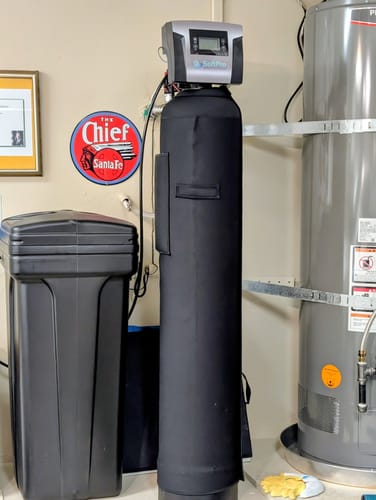
After six months of real-world ownership, extensive testing, and careful cost analysis, I can provide a confident assessment of the Iron Master AIO's value proposition for homeowners dealing with iron-contaminated well water.
Performance Excellence
The system delivers on its core promise completely. Iron removal from 4.2 PPM to below 0.1 PPM represents a 97% reduction that remains consistent across varying usage patterns and seasonal conditions. Water quality transformation is dramatic and ongoing – no diminished performance, no breakthrough periods, no maintenance-related downtime.
The air injection and Katalox media combination proves more effective than I expected. Beyond iron removal, the system addresses multiple water quality issues including occasional sulfur odors and general taste improvements. This comprehensive treatment provides value beyond the primary iron filtration purpose.
Flow rate performance meets household needs adequately, though it's not unlimited. The 7 GPM service flow handles normal usage excellently and manages peak demands acceptably. For households with extreme high-flow requirements, a larger system might be necessary, but for typical family usage, capacity proves sufficient.
Economic Value Proposition
The financial analysis strongly favors the investment. With total annual savings exceeding $1,200 and operating costs under $150, the net annual benefit exceeds $1,000. The system pays for itself within two years and generates substantial savings throughout its 10 year lifespan.
Beyond quantifiable savings, the intangible benefits add significant value: improved cooking and beverage quality, easier household cleaning, better laundry results, and appliance protection. These improvements enhance daily living quality in ways that justify the investment independent of cost savings.
Compared to ongoing costs of living with iron water – bottled water, cleaning products, appliance damage, clothing replacement – the Iron Master AIO represents a permanent solution that eliminates these expenses while improving overall water quality.
Installation and Maintenance Reality
For DIY-capable homeowners, installation is challenging but achievable. The process requires basic plumbing skills, careful attention to detail, and patience during programming phases. Total installation time of 6-8 hours spread across multiple days allows for careful work without rushing.
Professional installation would reduce stress and ensure optimal setup, though it adds $400-600 to total project cost. Either approach results in the same long-term performance, so the choice depends on individual comfort levels and available time.
Ongoing maintenance proves minimal and manageable. Monthly monitoring takes less than 20 minutes, and annual maintenance requirements are basic. The system operates reliably without constant attention or frequent adjustments.
Who Should Choose This System
The Iron Master AIO is ideal for homeowners with moderate to high iron levels (2-10 PPM) who want a permanent, chemical-free solution. It's particularly suitable for households that value water quality improvement beyond basic iron removal and prefer automated operation with minimal maintenance.
Families dealing with iron staining, metallic taste, and appliance damage will see immediate, dramatic improvements. The investment makes strongest sense for homeowners planning long-term residence where payback period and ongoing benefits justify the initial cost.
DIY enthusiasts who enjoy understanding and maintaining their home systems will appreciate the Iron Master AIO's straightforward design and reliable operation. The system provides satisfaction of a permanent solution implemented with personal involvement.
When to Consider Alternatives
Homeowners with very low iron levels (under 1 PPM) might find less expensive solutions adequate for their needs. Basic sediment filtration or water softening might provide sufficient improvement without the investment in dedicated iron filtration.
Households with extremely high flow rate requirements might need commercial-grade systems or multiple residential units. While the Iron Master AIO handles typical household demand well, homes with multiple high-flow applications might require larger capacity systems.
Renters or homeowners planning short-term residence might not realize sufficient payback to justify the investment. The system's value proposition depends on multiple years of ownership to recover costs and generate savings.
My Confident Recommendation
Six months of ownership convinces me that the Iron Master AIO represents excellent value for homeowners with iron water problems. The system delivers reliable, consistent performance while providing economic benefits that justify the investment within a reasonable payback period.
Installation challenges are manageable with proper preparation and patience. Operating costs remain low while ongoing benefits continue indefinitely. Build quality and design suggest the system will provide many years of reliable service with minimal maintenance.
For Kansas homeowners dealing with iron-contaminated well water, I recommend the Iron Master AIO confidently. The transformation in water quality, elimination of iron-related problems, and long-term cost savings make it one of the best home improvement investments we've made.
Would I purchase it again? Absolutely. The system has exceeded expectations while solving a problem that affected every aspect of household water usage. Six months later, I still appreciate the clean, iron-free water every time I turn on a faucet.